Product details description
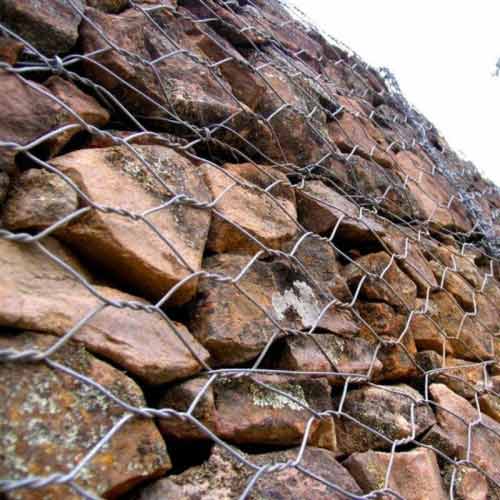
Gabion walls, composed of wire mesh baskets filled with stone, are valued
in civil engineering for their simplicity, durability, and ability to harmonize
with natural landscapes. However, their engineering design demands rigorous
analysis of structural stability and load distribution to ensure safety under
soil pressure, surcharge loads, and environmental forces.
Foundation design is the bedrock of stability. Gabion walls require a firm
base to prevent differential settlement, which can lead to tilting or collapse.
For granular soils, a trench 1–2 feet deep with compacted gravel or crushed
stone provides drainage and uniform support. In cohesive soils, deeper
foundations or geogrid reinforcement may be needed to counteract swelling and
shrinkage. The base width typically equals 50–70% of the wall height to
distribute vertical loads effectively.
Load distribution analysis focuses on lateral earth pressure, the primary
force acting on the wall. Engineers use Coulomb or Rankine earth pressure
theories to calculate active and passive pressures, considering soil friction
angle, wall batter (inclination), and surcharge from adjacent structures or
traffic. Gabion walls, with their flexible mesh and granular fill, behave as
semi-rigid structures, allowing slight deformation to dissipate pressure rather
than concentrating it at the base.
Structural stability is verified through factor of safety calculations. Key
checks include overturning (resisting rotation about the toe), sliding
(resisting horizontal movement), and bearing capacity (preventing excessive
foundation settlement). The weight of the gabion fill and the frictional
resistance between stones and mesh contribute significantly to stability, often
yielding higher factors of safety than rigid concrete walls in similar
conditions.
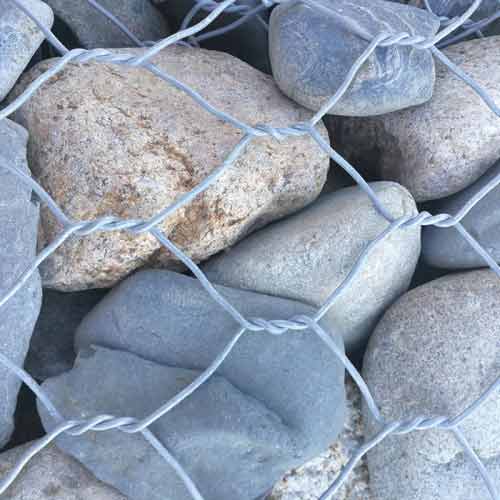
Wire mesh and fill material properties are critical design parameters. Mesh
is typically galvanized steel with tensile strength ≥ 40 ksi, and opening size
(2–4 inches) balances stone retention with drainage. Fill stones should be
angular, 3–8 inches in diameter, to interlock and resist displacement. Void
ratio (≈30%) ensures permeability, allowing water to drain through the wall and
reducing hydrostatic pressure.
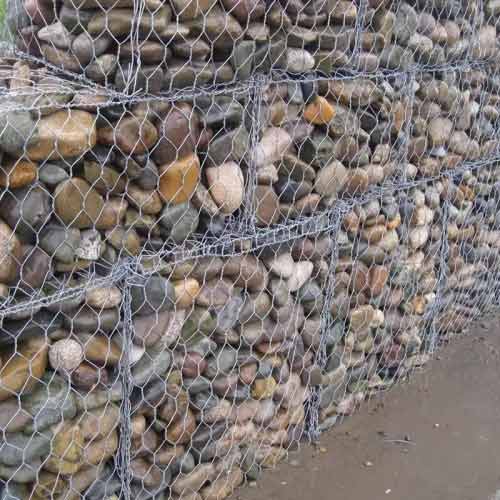
Construction sequencing and maintenance further enhance performance. Walls
are built in lifts (layers) of 1–2 feet, with each layer compacted to avoid
voids. Vegetation planted in the fill can reinforce the structure and improve
aesthetics. Regular inspections for mesh corrosion or stone loss enable timely
repairs, ensuring long-term stability. By integrating geotechnical principles
with material science, gabion wall design delivers sustainable, resilient
retaining solutions.
Previous article:
The Role of Gabion Walls in Sustainable Land Development
Next article:
Coastal Gabion Walls: Saltwater Resistance and Marine Environment Durability