Product details description
Gabion walls along highways serve dual purposes: stabilizing embankments
against erosion and acting as passive safety barriers that mitigate the
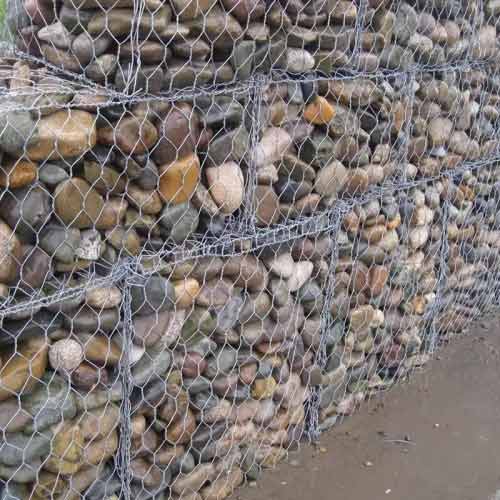
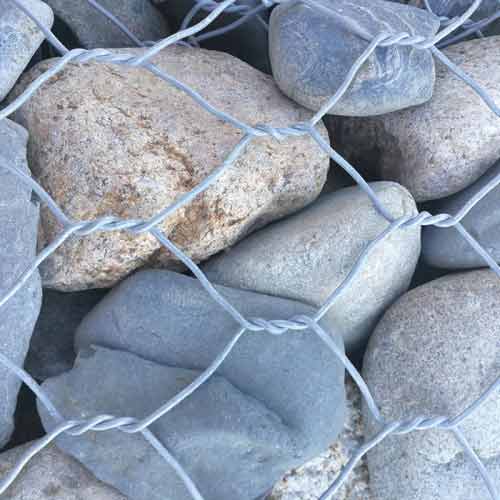
consequences of vehicle run-offs. Constructed from wire mesh boxes filled with
angular rocks or concrete blocks, these gravity-retaining structures absorb
impact energy by deforming slightly upon collision, reducing the risk of
rollover or penetration into hazardous terrain. Their permeability allows water
to drain freely, preventing hydrostatic pressure buildup behind the wall—a
critical advantage over solid concrete retaining walls that can crack or fail
under saturated conditions.
In steep roadside cuttings or fill slopes, gabion walls are engineered to
resist lateral earth pressures while accommodating minor settlement without
compromising structural integrity. They are particularly effective in regions
prone to landslides, heavy rainfall, or seismic activity, where traditional
rigid structures might fracture under dynamic loads. Modular construction
enables rapid deployment after natural disasters, making gabions ideal for
emergency slope stabilization projects. Moreover, their natural stone appearance
blends harmoniously with surrounding landscapes, enhancing aesthetic appeal
while fulfilling functional safety roles.
Safety performance is further enhanced through strategic design features
such as stepped profiles, angled faces, or integrated crash cushions. Stepped
gabion tiers reduce the vertical drop faced by errant vehicles, minimizing
kinetic energy transfer during impact. Angled front faces deflect vehicles away
from the wall rather than allowing direct frontal collisions, which can cause
severe damage. Some advanced installations incorporate energy-absorbing end
terminals or transition sections that gradually decelerate vehicles, mimicking
the function of highway guardrails while maintaining the ecological benefits of
gabion systems.
Maintenance and inspection protocols ensure long-term reliability. Regular
checks focus on wire corrosion, loose connections, displaced stones, or
vegetation overgrowth that could undermine stability. High-quality galvanized or
PVC-coated mesh resists rust and UV degradation, extending service life even in
coastal or de-icing salt-exposed environments. When combined with geotextile
reinforcement, drainage layers, and root-compatible planting, gabion walls
evolve into sustainable infrastructure solutions that support biodiversity,
improve water quality, and enhance community resilience against climate-related
hazards. As highway networks expand into challenging terrains, gabion technology
offers a balanced approach to safety, durability, and environmental
stewardship.
Previous article:
Coastal Gabion Walls: Saltwater Resistance and Marine Environment Durability
Next article:
Gabion Wall Foundation Requirements: Soil Bearing Capacity and Ground Preparation