How Gabion Wall Wire Mesh Transforms Landscapes
Release time:2026-02-28 Click:11
Gabion wall wire mesh, a flexible and durable material, has revolutionized landscape engineering by enabling the construction of stable, eco-friendly retaining walls and barriers. Comprising interconnected wire cages filled with stones, this mesh combines the strength of steel with the natural aesthetics of rock, making it a go-to solution for erosion control, slope stabilization, and decorative landscaping. Its ability to adapt to uneven terrain and promote vegetation growth sets it apart from rigid concrete structures, offering both functionality and ecological benefits.
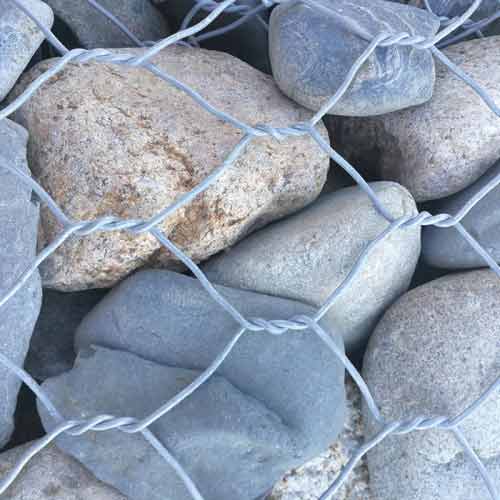
The structure of gabion wall wire mesh is deceptively simple yet highly engineered. Typically made from galvanized steel or PVC-coated wire, the mesh forms rectangular or cylindrical cages with grid sizes of 5–10 cm, allowing stones of 10–20 cm to be packed tightly. The wire, often 2.7–4.0 mm thick, is twisted into a double-twist pattern to prevent unraveling, even under heavy loads. For coastal or chemical-exposed areas, stainless steel mesh (316 grade) resists salt and acid corrosion, while PVC coating adds UV protection for prolonged outdoor use. The mesh’s flexibility allows it to bend around curves, making it ideal for meandering riverbanks or sloped gardens.
Applications of gabion wall wire mesh are as diverse as the landscapes it inhabits. In civil engineering, it constructs retaining walls to hold back soil on highways and railways, with heights reaching 10–15 meters. For riverbank stabilization, gabion walls absorb wave energy, reducing erosion more effectively than concrete. In residential landscaping, it creates raised flower beds, garden benches, or decorative waterfalls, with the wire mesh doubling as a trellis for climbing plants. Industrial sites use it to screen equipment yards, while disaster-prone areas deploy it as temporary flood barriers. Even urban spaces employ gabion walls to hide unsightly utilities like electrical boxes.
Advantages of gabion wall wire mesh over traditional materials are manifold. Unlike concrete, it is permeable, allowing water to drain freely and preventing hydrostatic pressure buildup that causes cracks. It promotes biodiversity by providing habitats for small animals and allowing plants to grow through the mesh. Cost-wise, it is 20–30% cheaper than poured concrete, with lower labor costs due to modular assembly. The use of locally sourced stones reduces transportation emissions, aligning with sustainable development goals. Additionally, gabion walls age gracefully, developing a patina that blends with the environment over time.
Installation of gabion wall wire mesh requires careful planning and execution. First, the site is surveyed to determine wall dimensions and soil conditions, with geotextile fabric laid at the base to prevent soil migration. Wire mesh cages are assembled on-site, with edges secured by hog rings or spirals. Stones (granite, limestone, or river rock) are packed tightly, starting with larger stones at the bottom for stability. For retaining walls, cages are stacked in tiers, with each layer offset to enhance strength. Backfilling with gravel and soil follows, with vegetation planted on the surface to stabilize the structure. Professional installers use laser levels to ensure even alignment, especially for tall walls.
Maintenance of gabion wall wire mesh is minimal but essential. Annual inspections check for wire corrosion, loose stones, or damage from falling debris. Weeds growing through the mesh are trimmed to prevent root-induced stress, while eroded areas are replenished with fresh stones. In winter, snow and ice are cleared to avoid excess weight on the structure. For damaged sections, individual cages can be replaced without dismantling the entire wall. As a living system, gabion walls improve with age, their stone-filled cages becoming integral to the landscape. This blend of engineering and ecology ensures their continued popularity in sustainable design.
Previous article:Curved Park Gabion Wall for Pathways
Next article:Corrosion-Resistant PVC-Coated Highway Gabion Wall for Coastal Highways
Hot products
Mobile: +86 13292822131
Email:metalproducts2023@163.com
Email:634049339@qq.com